Concert restroom rental in Minneapolis runs from a single ADA unit for a small acoustic show to a full bank of standard units and a restroom trailer for a 5,000-person outdoor stage. Most promoters mix unit types: standard toilets for general crowd flow, at least one ADA unit per ANSI/PSAI cluster rule, and a trailer if VIP or backstage guests need something nicer. Minneapolis Porta Pros builds the count around your gate numbers, not a guess.
Start with headcount, then split it by role. General admission crowds move fast through standard porta potty rental units, so a rough baseline is one unit per 75 to 100 attendees for a show under four hours, adjusted up if alcohol is served. Crews load in early and stay late, so add separate units for staff and vendors rather than making the audience share. Backstage and green room areas do better with a deluxe flushable porta potty or a small restroom trailer, since artists and crew are on-site for hours, not minutes. ADA Standards section 213.2 requires that where single-user units are clustered, at least 5 percent be accessible, with a minimum of one unit no matter how small the cluster. That means even a modest Minneapolis show with six standard units still needs an ADA accessible porta potty on-site. If your venue has a fixed capacity and repeat bookings, the how many porta potties do I need guide walks through the math event by event. For crews doing setup and teardown, OSHA 1926.51(c)(1) still applies as the baseline construction sanitation standard: 1 toilet for 20 workers or fewer, scaling up from there. Uncertain on total attendance? Rent slightly high. A trailer or extra standard unit sitting unused costs far less than a line wrapped around the block during headliner set.
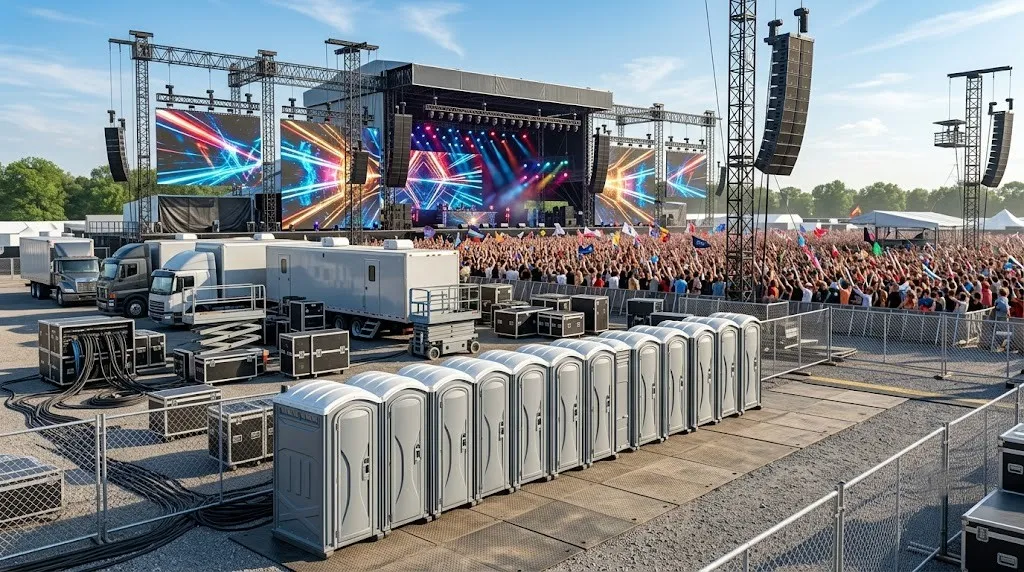
Ground conditions and crowd flow decide the layout more than the guest count does. Concert sites in Minneapolis are often turf, gravel lots, or paved plazas, and each surface changes how units get placed and serviced. ADA Standards section 302.1 calls for stable, firm, slip-resistant ground at accessible units, which usually means matting or a leveled pad on grass. Standard units measure about 44 by 48 inches on the ground and stand roughly 92 inches tall, so cluster them in rows with service access from behind, away from foot traffic. For gate-checked or ticketed events with heavier turnout, a restroom trailer rental gives you real sinks and mirrors, which matters for VIP tiers and sponsor areas. Options range from a 2 stall restroom trailer for a small stage to an 8 stall restroom trailer for a full festival footprint. Pair units with a handwashing station rental near food vendors, since concessions crews handling food need washing access separate from the general restroom line. If your event runs food trucks with grease, ask about grease trap pumping so vendor tanks don't back up mid-show. Load-in for a trailer or a roll-off needs clearance too; a roll-off delivery needs about 60 feet of straight clearance behind the truck, which matters if your site has a tight loading alley. Fencing off the restroom zone with temporary fence rental keeps lines orderly and keeps units away from stage barricades.
Book as soon as the date and venue are locked, especially for outdoor Minneapolis shows competing with festivals and weekend events for the same trailer inventory. Weekend concert bookings often carry premium trailer pricing, so locking in early avoids scrambling for a smaller substitute unit two weeks out. If your show is added late or a headliner cancels and reschedules fast, emergency porta potty rental can still get units on-site same day in many cases. Multi-day festivals need a service plan too, not just delivery: ANSI/PSAI Z4.3 sets a baseline of one service visit per week for units seeing steady traffic, but a concert crowd blows through that fast, so daily servicing during the run is standard. Waste doesn't stop at restrooms either. Backstage catering and merch tents generate trash fast, and a roll-off dumpster rental parked near the loading dock keeps the site clear under OSHA 1926.25 housekeeping expectations. If your venue sits near St. Louis Park, about 8.0 miles west of downtown Minneapolis, or Roseville, 9.0 miles northeast, delivery windows are similar to anywhere else in the metro, so book on show date, not proximity. For venues further out, like Bloomington at 12.3 miles south, factor that drive into your load-in schedule.
Pricing depends on unit mix and rental length. A standard unit for an event-length rental runs 200 to 800 dollars, ADA units run higher per day, and a restroom trailer for an event can run 2,499 to 3,899 dollars. See porta potty rental cost for a full breakdown by unit type.
Placement in the right of way or on public land needs confirming with the city; we have not verified a specific Minneapolis ordinance for this use. Check the porta potty permit requirements page before finalizing your site plan.
Yes. A 2 stall restroom trailer works for shows under a few hundred people, especially indoors where standard units aren't practical. Pair it with one ADA unit to stay compliant.
As soon as your date is set. Weekend trailer demand in Minneapolis climbs fast, and inventory for popular unit sizes runs out weeks before a big show.
Call and add units before doors open, not after. Minneapolis Porta Pros can often add standard units same day; see emergency porta potty rental for rush options.
Yes. Minneapolis Porta Pros delivers concert restroom rental across Minneapolis and the surrounding metro, with same-day and next-day drop-off available on most orders.
Pricing depends on the unit and how long you need it. See our cost breakdown and request a free quote for an exact figure.
Standard rentals include scheduled service — a pump-out, a clean, a restock and fresh deodorizer. Busy or hot-weather sites can be serviced more often.
Call now or request a free quote — clean units, on-time delivery, transparent pricing.