Farm and agricultural restrooms in Minneapolis run on a standard unit priced $100 to $350 a day or $130 to $500 a week, and OSHA 1928.110 sets the field sanitation baseline hand-labor operations need to follow. Harvest crews, orchard rows and hobby farms outside the city all qualify.
OSHA 1928.110 covers hand-labor agricultural work and calls for one toilet facility per 20 employees, reachable within a quarter mile walk of wherever the crew is working. That is a different rule than construction sites use. Contractors follow OSHA 1926.51(c)(1), which sets one toilet for 20 workers or fewer, then a toilet and urinal per 40 workers as the crew grows past that. If your farm runs a hybrid operation, say a produce stand with a construction crew building a new barn, you may need units under both standards on the same property. Minneapolis Porta Pros sorts that out during the quote call rather than after delivery.
Potable water matters just as much as toilet count. OSHA 1926.51(a)(1) requires an adequate supply of drinking water at any place of employment, and a lot of rural properties around Minneapolis do not have a hose bib anywhere near the field. A handwashing station rental or a portable sink rental solves both the water and the sanitation half of the requirement at once. Farms spraying herbicides or pesticides should look at OSHA 1926.51(f)(1), which requires washing facilities specifically where herbicides, insecticides, paints or coatings are in use. Standard hand sanitizer does not satisfy that. 29 CFR 1910.141(d)(2) requires soap and a towel or hand-drying device wherever washing facilities exist, sanitizer alone does not meet it either.
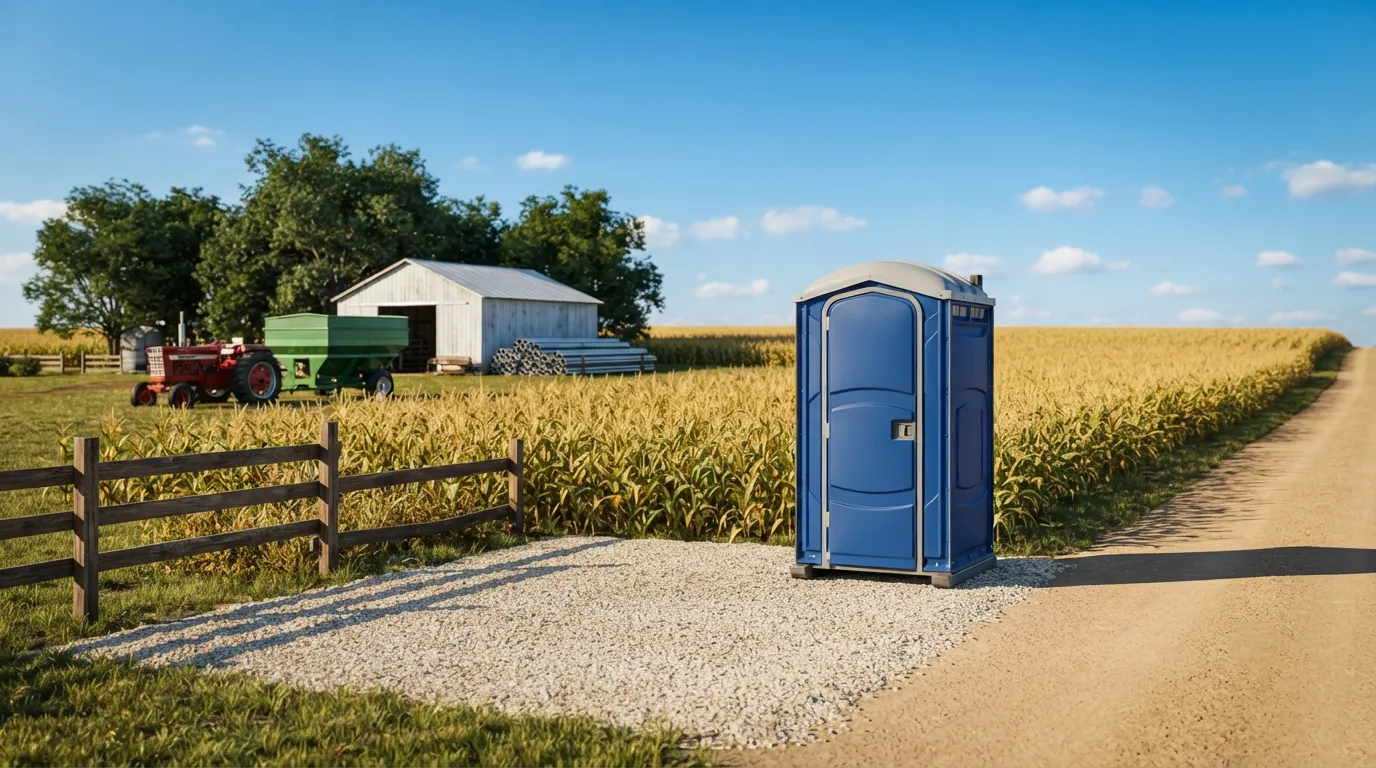
Placement matters on farm ground. A unit needs a stable, level surface, and a porta potty placement guide walks through where units sit best on soft or uneven soil.
A retail farm stand or a U-pick weekend draws a different crowd than a harvest crew, and it needs a different unit mix. Customers walking in from the parking area expect something closer to what they would find at event restroom rental setups. A deluxe flushable porta potty runs $85 to $1,200 a day depending on the model, and it holds up better for public-facing traffic than a bare-bones standard porta potty rental unit. If your farm hosts weddings or fall festivals, at least one unit needs to be accessible under ADA Standards section 213.2, which requires 5 percent of clustered single-user units to be accessible, and never fewer than one. Check the ADA accessible porta potty page for what that unit includes, including the 304.3.1 60 inch turning circle and the 404.2.3 32 inch minimum door width.
Farms near Roseville, 9.0 miles northeast of Minneapolis, and farms toward Blaine, 19.0 miles north, both fall inside our delivery range, and the service areas page lists what else is covered. A roll-off delivery truck needs about 60 feet of straight clearance behind it, worth checking before harvest season if your lane is tight or lined with equipment. If you are running a corn maze or pumpkin patch alongside a working farm, look at festival restroom rental or county fair restrooms for the crowd-volume math, since a retail weekend draws differently than a five-day harvest crew.
Yes, many working farms run a septic system for the farmhouse and outbuildings separate from any portable units brought in for field crews or events. A typical residential septic tank gets pumped every 3 to 5 years, depending on tank size and household size, and a grease interceptor at a farm kitchen or stand needs pumping once fats, oils, grease and solids reach 25 percent of the liquid depth. Septic pumping service covers scheduled and emergency visits, and grease trap pumping handles the kitchen side if you run a stand with food service. Some farms skip a fixed system entirely and rent a holding tank rental instead, especially for a seasonal operation that does not run water year-round.
Winter brings its own problems. A porta potty in winter needs different servicing than summer harvest units, and Minneapolis winters are hard on standing water lines. If you are also clearing brush, fencing pasture or running a dumpster for cleanup, roll-off dumpster rental and temporary fence rental both pair well with a farm sanitation order, and bundling delivery trips keeps the delivery fee down.
A standard unit runs $130 to $500 a week depending on service frequency and unit count. Multi-week harvest rentals often land toward the middle of that range. See porta potty rental per day for shorter jobs.
Placement in the public right of way needs confirming with the city; farm fields outside city limits usually do not trigger that question. Check the porta potty permit requirements page before delivery day.
The baseline is one service visit per week for up to 10 users over a 40 hour week. Larger crews or longer hours need more frequent service, which Minneapolis Porta Pros schedules directly.
Not well. Field crews under OSHA 1928.110 need units within a quarter mile walk, while stand customers need a unit near parking. Most farms order separate units for each.
Then two OSHA standards may apply at once, field sanitation and 1926.51(c)(1) for the build crew. See construction site services or OSHA portable toilet requirements for the breakdown.
Yes. Minneapolis Porta Pros delivers farm and agricultural restrooms across Minneapolis and the surrounding metro, with same-day and next-day drop-off available on most orders.
Pricing depends on the unit and how long you need it. See our cost breakdown and request a free quote for an exact figure.
Standard rentals include scheduled service — a pump-out, a clean, a restock and fresh deodorizer. Busy or hot-weather sites can be serviced more often.
Call now or request a free quote — clean units, on-time delivery, transparent pricing.